Road construction
Record aggregate or asphalt type, haul distance, road speed, site grades, paving or unloading interface, cycle target, and axle or length constraints.
Eligibility applies to qualified business buyers and is confirmed after we review your product, quantity, destination, and sourcing requirements.
Application-to-RFQ translation
The same truck label can hide different materials, routes, legal operating conditions, body wear, loading equipment, maneuvering limits, and daily cycles. This page shows which purchase questions change with the work.
Describe the Operating Task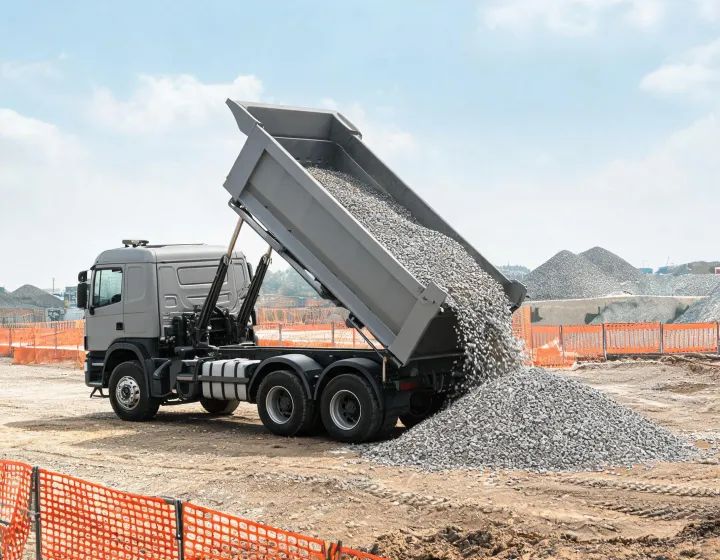
Six procurement contexts
Record aggregate or asphalt type, haul distance, road speed, site grades, paving or unloading interface, cycle target, and axle or length constraints.
Clarify debris density, impact and abrasion, body liner, side height, tailgate control, loading machine, overhead clearance, and cleanout needs.
Separate off-road work from public-road travel. Ask about grades, surface, tire specification, braking, cooling, dust exposure, shift hours, and maintenance access.
List snow or seasonal attachments, lighting, visibility, corrosion protection, cab needs, turning space, low-speed duty, and required fleet documents.
Balance compact dimensions and maneuverability against material volume, density, payload, side height, towing requirement, and frequent short-cycle operation.
Define the configuration mix, units per build, option policy, spare parts and service-document expectations, labeling, destination, and acceptance process.
Give material types and approximate density ranges, loading method, haul length, trips per shift, gradients, road mix, and unloading conditions. A volume-only request cannot establish usable payload.
State body dimensions, wheelbase or turning constraints, axle count preference, cab needs, overhead clearance, towing, attachment, and tire requirements. Mark each item required or negotiable.
Ask for exact-configuration GVWR, GAWR, curb weight, payload basis, body weight, dimensional drawing, hoist details, and model-year documents. Do not substitute a family maximum.
Identify destination state or port, Incoterm, quantity, delivery window, inspection plan, packing, export documents, and who handles freight, duty, registration, and local acceptance.
Start from the material and duty, then evaluate both. Volume helps describe body capacity; payload depends on the exact chassis, body weight, equipment, axle ratings, and load distribution.
Higher abrasion or impact may justify a wear-focused construction, while lower tare weight may preserve payload elsewhere. Compare material grade, thickness, reinforcement, repair approach, and total configured weight.
Do not assume so. Vehicle category, exact build, model year, destination rules, ratings, lighting, braking, emissions, and documents require separate review.
Hold duty, body fit, wheelbase, axle ratings, powertrain, service expectations, and destination requirements constant, then record every changed assumption.
Submit what is known and label open choices. We can return a focused question list without filling gaps with invented performance numbers.
Share material, cycle, route, dimensional limits, ratings, quantity, destination, and required evidence. Candidate factories can then respond to the same operating question.
For qualified business buyers
Eligible sourcing support may provide up to 3%.
Eligibility applies to qualified business buyers and is confirmed after we review your product, quantity, destination, and sourcing requirements.
Share truck requirements